What is the command to check total hard disk size in Linux. This post explains how to use du command in Linux Ubuntu to check disk space in terminal. Df and du commands are file management tools that will check disk space in Linux and display all stored files on your machine. You are allowed to add certain options (like -h, -m, -k, etc.) to refine the output based on your needs.

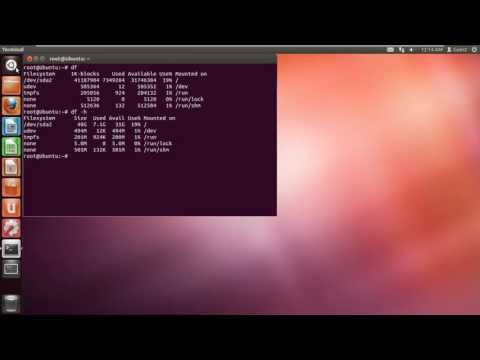
In this tutorial, we are going to show you how to use the df command to check disk space, and the du command to monitor disk usage in terminal. These are the two essential Linux commands that will help you manage your files more effectively. There is 78% disk space used on the first partition of the first hard drive. We can use the du command to show which folders are holding the most data. Issuing the du command with no options will display a list of all directories and sub-directories below the directory the du command was issued in.
If you do this from your home folder the listing will be very long. In this tutorial, learn how to use the df command to check disk space in Linux and the du command to display file system disk space usage. This article showed you how to check the available disk space in a device using the command-line in Linux. All the three methods described above were a variation of the df command.

You can easily use the df command to check the disk space in Linux from the command line by adjusting the flags according to your requirements. Or, you can simply use this command alone and without any flags. The output of this command will help you to see your current disk space usage and the amount of free space. The df command is used to list the amount of disk space available as a whole.

The df and du commands report on disk space usage from within the Bash shell used on Linux, macOS, and many other Unix-like operating systems. These commands let you easily identify what's using up your system's storage. When executed the df command displays the information about the file system disk space usage. It shows the device name, total blocks, total disk space, used disk space, free disk space and mount points. You should now understand how to use df and du commands to check disk space on your Linux system.

Remember, to display a complete list of options, use either df --helpordu --help. You can use the du command with -hs option to display the total disk space usage of the specified directory. You can use the df command without any argument to check the disk space usage of mounted file systems. Many online tutorials recommend the df command to use when checking for disk space usage on a Linux system.

You can use this command to show disk usage and free disk space for a specific file system. Parted is another alternative to fdisk and is also used for manipulating disk partitions. It is useful for creating space for new operating systems, reorganising disk usage, and copying data to new hard disks.

By refining the information returned by df and du it is easy to find out how much hard disk space is in use, and to discover what is taking up that space. You can then make an informed decision about moving some data to other storage, adding another hard drive to your computer or deleting redundant data. However, all of these use cases are beyond the scope of this article. That is why we have only focused on the use cases of the df command that are directed towards checking the disk space. Keep in mind that the df command only shows disk space for mounted filesystems.
This article will use the commands df and du to analyze disk and partitiona space as well as storage usage by files and directories. These commands are pretty standard on Unix-like operating systems like macOS and Linux. The df command in Linux is probably one of the most commonly used. It lists the actual "disk space usage" and it can give you information about what hard disks is being used in the entire system. The df command is excellent for listing all available hard drive mount points or if you know where the problem is.
However, you will generally only need to examine the / mount when searching for disk space hogs. The disk space usage could often be unrelated to your website's files and instead caused by software update caches, large log files, or other server-level related data. The problem with this tool is that if you have a larger hard drive to check, it can take a long time to run.
Also, because it's run as the currently logged in user, it doesn't have access to all directory locations, so the disk usage problem could be in a place the tool can't access. Df is a Linux command line utility to monitor your Linux disk usage. The df command prints the complete summary of the disk usage details of your file system. Df is one of the most used command to check space of available partitions on the Linux setup. You can use df wih -Th to print the partition type and the partition size in human readable format. This command will show you the total available, used and free space per partition.
When managing your servers, taking charge of system resources is of utmost importance. There are many advantages and benefits of Linux which makes it one of the most popular operating systems out there. Every server has a lot of resources like memory, computing power, etc. One of the most important system resources is the hard disk space. To manage your server effectively and ensure no unwanted disruption, you need to manage your disk space frequently.

When your system runs out of space, the application or database hosted on the system will crash. Recovery from a crash might take some time, and you may lose important data which wasn't flushed to disk because the disk ran out of space. You can learn about ServerMania's Linux dedicated servers and Linux server costs on our official blog. The "df" command is for "disk filesystem" and is a great tool to know about the disk space usage on Linux Systems.

The df command displays the amount of disk space available on the file system. Disk Usage Analyzer is a graphical menu driven application that reports disk usage in Gnome and Kubuntu environments. DUA can scan the entire file system tree or individual directories, either local or remote.
DUA is also dynamic, in that it will report in real time any devices that are mounted and unmounted. The du command allows you to see the disk usage information at a more micro level than that of the df command. Invoking the du command without any arguments will display the disk usage for the current directory. If you've ever ran out of disk space, you know how terribly painful it can be.

If you have a swap file or partition configured, it will start to shred. Working with a remote server can be even more painful, especially if you don't have any GUI monitoring services running. Fortunately, we can get everything we need from the command-line using commands like df and du.

In the above guide, you learned how to check disk space usage with the du and df command. You can also use the du command to check the disk space usage in Linux system. There are often situations where you need to perform a disk space check on your Linux operating system. In this article I will share different commands and methods to check disk space in Linux. Most of these commands and methods should be available on most Linux distros. You can also utilise these commands to create a script to monitor disk size usage and create alarms or send mails .

The command lists out every single directory, subdirectory and file and reports the amount of disk space that it's occupying. The final line of the output is the total disk usage for the directory, at upper most level. DF command is a command-line tool that comes pre-installed in most Linux systems and has long been used to check Disk usage and available disk space.

It supports several arguments that display specific Disk Usage information. Fdisk is the most commonly used command to check the partitions on a disk. The fdisk command can display the partitions and details like file system type.

If we want to see the sizes for a set of filesystems, we can specify them by name. The first drive is called /dev/sda , the second drive is /dev/sdb, and so on. We tell df to return information on a particular filesystem by passing the name of the filesystem as a command parameter. Let's look at the first partition of the first hard drive. Unless told not to, df will provide information on all of the mounted file systems. This can lead to a cluttered display with a lot of output.

For example, the /dev/loop entries in the lists are pseudo file systems that allow a file to be mounted as though it were a partition. If you use the new Ubuntu snap method of installing applications, you can acquire a lot of these. The space available on these will always be 0 because they aren't really a filesystem, so we don't need to see them.

In the same manner, you can also use the -k and -m flags with the df command to check the disk space in Linux via the command line in kilobytes and megabytes, respectively. This can be done if you require the disk space in a specific unit for a specific purpose. By allowing this, the df command or utility provides you with the flexibility to check your disk space in whichever format you prefer. Finding out how much space is being used on your Linux-attached drives is quite simple. As long as your drives are mounted to the Linux system, both df and du will do an outstanding job of reporting the necessary information. With df you can quickly see an overview of how much space is used on a disk and with du you can discover how much space is being used by specific directories.
These two tools in combination should be considered must-know for every Linux administrator. The du command only displays the disk usage of directories. To display the disk usage of all items including files and directories, you can use -a flag.

The powerful graphical user interface provides users with a scan feature to check specific parts of the file systems. You can scan a single folder, the entire file system, or remote directories and filesystem if you are working with a server system. The cfdisk is slightly different from the above commands, it provides the graphics view in a text-based terminal interface to manage disks.

Using cfdisk you can list, create, delete and modify partitions on a disk device. The fdisk command is a text-based utility used to manage disk partitions. Using fdisk you can list disk partitions, create a new partition, delete an existing hard disk partition and view the size of the partition. This one is similar to previous ones mentioned, it lists all partitions and allows to manage them. Its main difference is that it also informs you the brand and model of your hard disks and even the type of connectivity used in it and total disk size. Have you had disk space usage problems on your Ubuntu file system and resolved them with the du command?

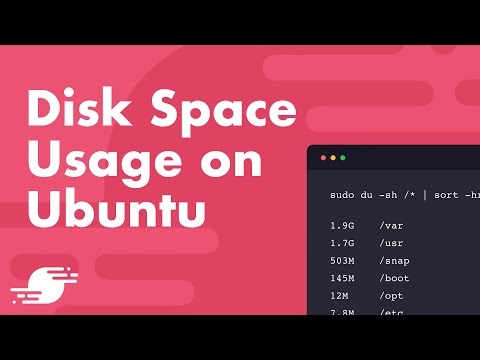
Being able to sort the output by size is another essential part of checking for disk space hogs. To do this, we can add a filter to the du output using the sort command. As its name suggests, sort allows you to sort lines of text files. What's great, users can get a more specific result by combining du and df with other commands, such as sort, grep, and exclude.

Together, they will help you better understand how disk space is used on your server. Be sure to check out our article for more useful Linux commands. Df, which stands for Disk Filesystem, is used to check disk space. It will display available and used storage of file systems on your machine. If you need to see the information represented in numbers of inodes, use the -i option.

An inode is a data structure used by Linux filesystems to describe files and to store metadata about them. On Linux, inodes hold data such as the name, modification date, position on the hard drive, and so on for each file and directory. This isn't going to be useful to the majority of people, but system administrators must sometimes refer to this type of information. Like every other operating system, Linux also provides multiple ways to keep track of the disk space on your device, including both CLI-based and GUI-based methods. In Linux, however, most operations are performed via the command line.
Therefore, Linux users are more likely to be interested in methods of checking disk space via the command line. This is why our discussion today will revolve solely around methods for checking disk space in Linux from the command line. The "df" command displays the information of device name, total blocks, total disk space, used disk space, available disk space, and mount points on a file system. Checking free disk space with df command in LinuxIf the above output is confusing for you, don't worry.
I'll explain a few things around checking available disk space in Linux. As the disk space is shown in 1K blocks by default, users can use "-h" command parameter to show the file system disk space usage data in "human readable" format. Du command – 'du' reports the amount of disk space used by the set of specified files and for each subdirectory .

No comments:
Post a Comment
Note: Only a member of this blog may post a comment.